Snow and ice on the roof: the property owner's responsibility
Swedish public order law requires snow and ice to be removed before anything falls. What the responsibility looks like, which roof safety equipment is required and what to do this autumn.
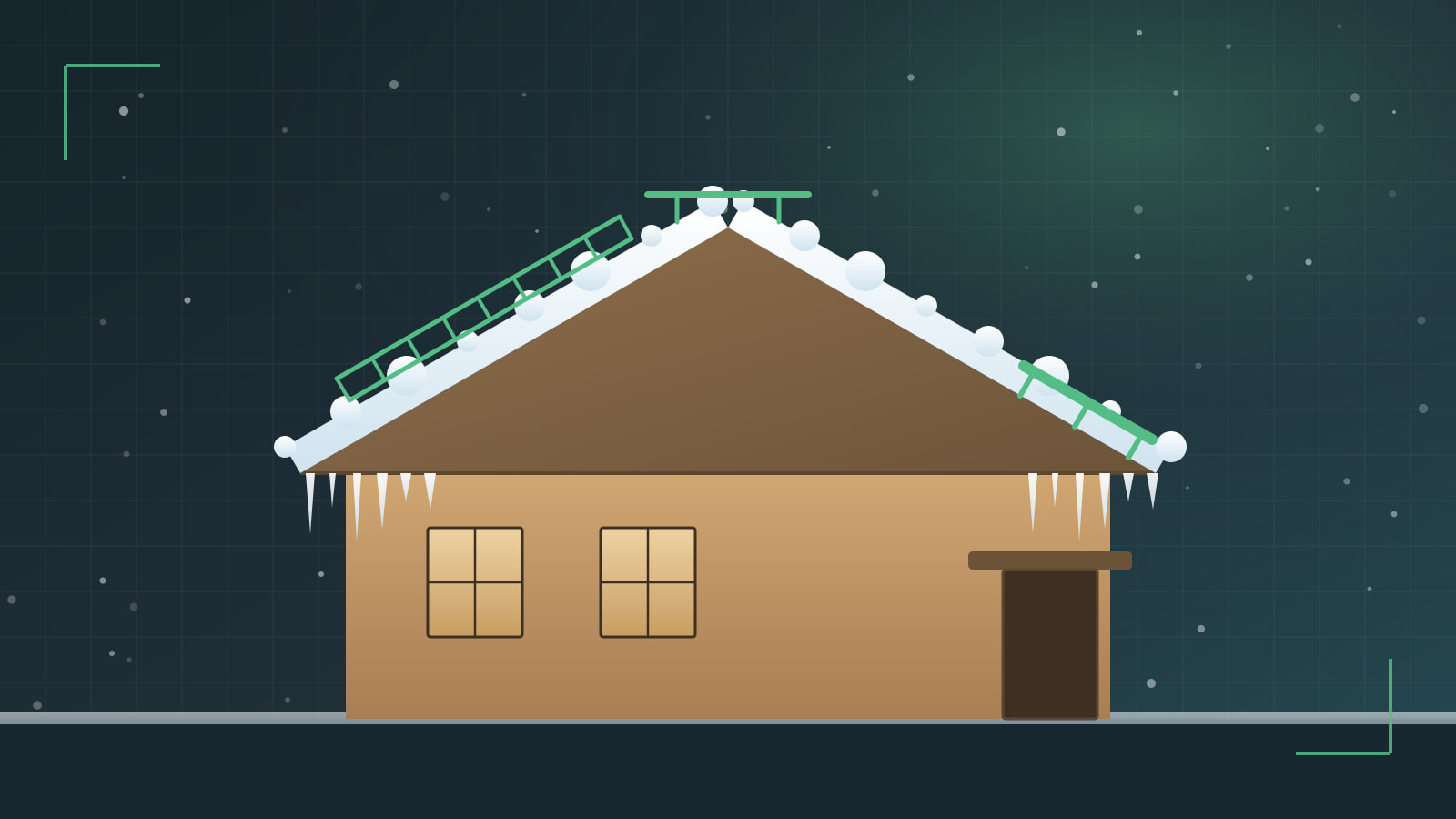
The most expensive item on a roof is rarely the tiles. It is the icicle that comes loose above an entrance at half past seven in the morning.
September is the right time to read this. Not January, when the ladder is already against the façade and someone is about to climb onto a slippery roof to solve a problem that should have been dealt with in the autumn.
Short answer: the property owner is obliged to make sure that snow and ice do not fall and injure people or damage property. The obligation covers both monitoring the risk and dealing with it, and it cannot be contracted away with a sign. Roof safety equipment must be in place and maintained, and it should be inspected by a competent person at least every five years.
What the law requires
The responsibility is set out in the Swedish Public Order Act (ordningslagen, 1993:1617), Chapter 3, Section 3. It means that snow and ice that could fall and injure people or damage property in a public place must be removed from roofs, gutters and similar fixtures without unreasonable delay.
Three things in that wording are worth pausing on.
"Could fall." The obligation applies once there is a risk, not once something has fallen. The fact that nothing has happened yet is no defence.
"Without unreasonable delay." There is no fixed time limit. The assessment is made according to the circumstances – and after heavy snowfall followed by temperatures above zero, the margin is short.
"Public place." Streets and pavements are obviously covered. But responsibility towards people moving around on the property itself – residents, visitors, staff, the bin lorry driver – follows from the general rules on liability for damages anyway. The fact that the courtyard is private land does not help someone who has been hit on the head by a block of ice.
A property owner who fails in this duty can be both liable for damages and criminally liable. In the case of serious injuries, it is no longer an insurance matter.
A cordon is a temporary measure while waiting for the snow to be removed. It is not a measure in itself, and a sign saying "pass at your own risk" does not free anyone from responsibility.
Who carries the responsibility in practice
In a housing cooperative, the responsibility lies with the board, as the legal representative of the property owner. The execution can be outsourced to a property manager or contractor, but the duty of oversight stays with the property. The board must be able to show that it had a routine, that the routine was followed, and that somebody actually looked.
That is why the documentation is not bureaucracy. It is the evidence. A log showing who checked the roof on which date, and what was done, is the difference between an insurance claim and an investigation into who was negligent.
Roof safety equipment: what must be in place
Boverket's building regulations set requirements for fixed equipment on roofs. The most important ones:
- Protection against falling snow and ice at entrances. At every entrance, the roof must have protective equipment. The snow guard often needs to be longer than just the section above the door, because snow moves sideways as it slides.
- Fixed equipment for moving around on the roof between the access point and the work location. Roof ladders for vertical movement, walkways for horizontal movement. What is required is assessed based on the roof pitch and the friction of the roofing material.
- A ridge walkway is required for moving around and for anchoring personal protective equipment during inspection and maintenance, when the roof pitch exceeds 6 degrees and the fall height exceeds 2 metres.
- Anchor points for a safety line at work locations such as chimneys, roof hatches and ventilation outlets.
- A safe access point, sized for the person who actually has to go up.
For existing buildings, the equipment must be kept in working order. A snow guard on rusty fixings fulfils nothing, and a roof ladder screwed into roof boarding without reinforcement is more dangerous than no ladder at all – it inspires confidence it does not deserve.
Roof safety should be inspected at least every five years by someone competent in roof safety, and it is the property owner's responsibility to make sure this happens.
Why icicles form – and what they tell you about the roof
Icicles are not just a winter phenomenon. They are a symptom.
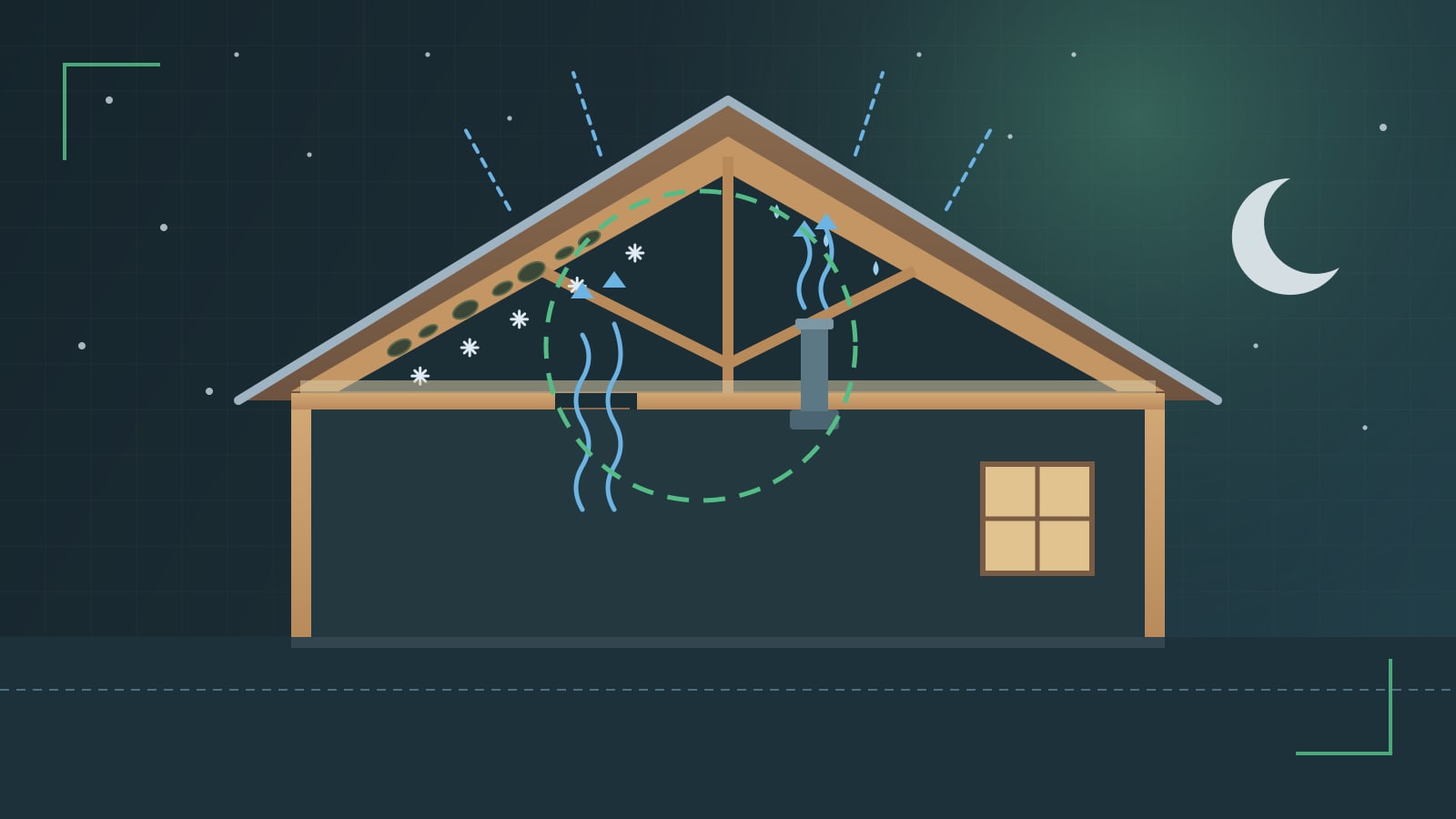
They form when snow on the roof melts from above and the water runs down to the eaves, which are colder, and freezes there. The heat that melts the snow comes from inside the building. That means a roof with a lot of icicles almost always has inadequate insulation or a leaky loft floor, often combined with poor ventilation in the loft.
The consequence: a cooperative that shovels and chips away every winter is treating the symptom. The measure that removes the problem is to seal and add insulation to the loft floor, which also lowers the heating costs. That belongs in the same discussion as the energy measures for the building stock.
Ice forming in gutters and downpipes has a different cause: leaves and debris that stop the water draining away. That is solved by clearing them twice a year.
Checklist before winter
Do this in September or October, not in December:
- Clear gutters and downpipes. Leaves, moss, grit from roof tiles.
- Check the snow guards – are they secure, are the fixings intact, do they cover the full width of the entrance?
- Check roof ladders and walkways, especially the fixings.
- Inspect the anchor points for safety lines.
- Look in the loft for damp patches and check that the ventilation is not blocked by insulation.
- Check the flashing around chimneys, ventilation and roof windows.
- Book a roof safety inspection if more than five years have passed.
- Write down the routine: who monitors the snow situation, at what amount of snow action is taken, who to call, and where it is logged.
- Check the contract with the property manager or snow contractor – is clearing the roof included, or only the ground?
The last point is the one that most often turns out to be a gap. Many cooperatives believe roof clearing is included in winter maintenance. It rarely is.
About clearing snow from roofs
Clearing a roof is work at height, on ice, often in the dark. It is not a job for the board and not a task for an enthusiastic member with a shovel.
Hire a contractor, and check that they have:
- Training for work at height and the right fall protection equipment
- Liability insurance that covers damage to the roof and to third parties
- A routine for cordoning off the ground below during the work
- Experience with the roofing material – metal roofs, felt roofs and clay tiles are cleared differently
Two practical things that cause expensive damage: clearing all the way down to the waterproofing layer, which tears felt and loosens tiles, and chipping ice with a crowbar. Leave a protective layer of snow, and deal with ice using heat or patience, not force.
What it costs compared with what it can cost
A snow guard above an entrance costs a fraction of the excess in a personal injury claim. A roof safety inspection costs less than a single emergency snow-clearing call-out with a lift in January.
What makes winter maintenance hard to prioritise is that successful prevention is invisible. Nobody thanks a board for the accident that didn't happen. But the item belongs in the maintenance plan together with the roof, façade and stacks, and it is one of the cheapest lines in it.
If the roof is due to be replaced within a few years anyway, it makes sense to include roof safety in the same project. The scaffolding is already up, and fixings can be done properly while the substrate is open.
Frequently asked questions
Is a warning sign enough?
No. A cordon can be a temporary measure while waiting for the snow to be removed, but it does not replace the obligation to remove the snow and ice.
How often should roof safety be inspected?
At least every five years, by a person competent in roof safety. After a storm or roof work, a check should be made regardless of the interval.
Who pays if snow from our roof damages a car?
The property owner, if the obligation to remove the snow has not been met. The liability section of the building insurance normally handles the compensation, but the excess and the premium increase stay with the cooperative.
Does a homeowner also have to clear their roof?
Yes, the same obligation applies. The risk is usually smaller because house roofs rarely border a public place, but responsibility for injury to visitors and neighbours remains.
We have snow guards. Is that enough?
Snow guards reduce the risk but do not remove the obligation to monitor and act. With large amounts of snow, it can still build up over the guard, and icicles form at the eaves regardless.
Shall we look over your roof before winter?
Byggentra AB carries out roof safety checks, fits snow guards, roof ladders and walkways, clears gutters and provides ongoing roofing and property maintenance in Kållered, Mölndal, Gothenburg, Lindome, Kungsbacka, Landvetter and Partille, for housing cooperatives, property owners and homeowners.
Describe the property and we'll book a visit – free quote within 24 hours on weekdays.