Pipe replacement or relining? How housing cooperatives choose
Relining is cheaper and faster, full pipe replacement lasts longer. How a cooperative board decides which suits its building - and what each costs in Gothenburg.

A cooperative board in Krokslätt got in touch in March. The building dates from 1963, has 34 apartments and cast-iron drains that have never been touched. On the table were two quotes: relining for SEK 3.1 million and a full pipe replacement (stambyte) for SEK 9.2 million. The question they asked was which one to choose.
The real question was a different one. How long does the cooperative intend to own this problem?
Short answer: relining suits buildings where the pipes are intact but worn on the inside, and where the cooperative needs to postpone a full replacement without ripping out 34 bathrooms. Full replacement is right when the cast iron has corroded through, when the wet rooms are worn out anyway, or when you want to be done with the issue for fifty years. Everything in between is decided by camera inspection, finances and how much disruption the residents can cope with.
What the two methods actually involve
Full pipe replacement means the pipes are replaced. Drain stacks, water supply pipes and usually heating pipes are torn out and replaced with new ones. The bathrooms are stripped down to the floor structure, because the stacks run through floors and walls, and are rebuilt with new waterproofing. In practice it is a full renovation of every wet room in the building, with the pipework as the reason.
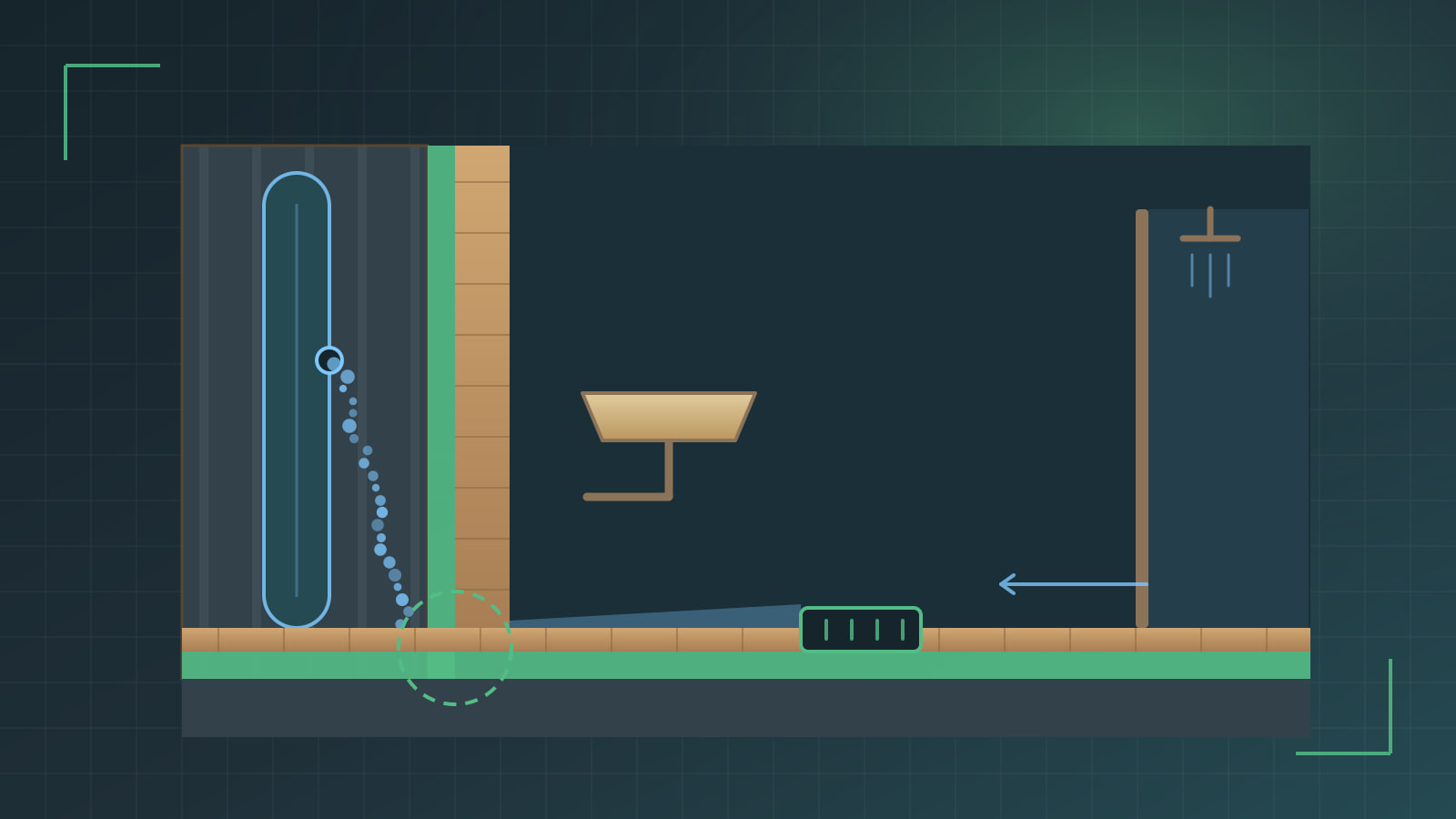
Relining means the existing drain pipes are given a new layer on the inside. The pipe is cleaned mechanically and filmed, and then either a resin-soaked liner is inserted and cured against the pipe wall (cured-in-place lining) or a plastic coating is sprayed on in several layers (spray lining). The pipes stay in place. The bathrooms stay in place.
Here is the detail that decides a surprising number of procurements: relining is a method for drains, not for drinking water. Copper water supply pipes cannot be fixed the same way. If the cooperative has problems with both drains and water supply, relining solves half the need, and the other half comes back as a separate project a few years later. Include that in the calculation from the start, not at the general meeting.
How to find out what condition the stacks are in
Age is an indication, nothing more. Two buildings from the same year can be in completely different condition depending on water quality, how much grease has been flushed down over the years and whether someone made an emergency repair in the nineties without documenting it.
Order a condition survey before you invite tenders. It should include:
- Camera inspection of every stack, not a sample. Two stacks tell you nothing about the other six.
- Pipe samples, where a piece of pipe is cut out and the wall thickness is measured against the original. It is the only thing that gives a hard number instead of an assessment.
- Inspection of horizontal drains in the basement and under the ground slab. They are often in worse condition than the vertical stacks, and they are the most expensive to reach.
- The condition of the water supply reported separately.
- Photos and a written conclusion that can be presented at a general meeting without needing translation into plain language.
A survey like this costs a fraction of the project and regularly pays for itself in the negotiation.
A tender submitted without camera inspection is a guess in the form of a quote.
What does it cost in the Gothenburg area?
| Measure | Normal range per apartment | Comment |
|---|---|---|
| Relining of drain stacks | SEK 60,000–120,000 | Depends on number of stacks and access |
| Pipe replacement without bathroom upgrade | SEK 180,000–260,000 | Unusual, occurs when the wet rooms are new |
| Pipe replacement with new bathroom | SEK 250,000–450,000 | The usual approach |
| Condition survey with camera inspection | SEK 25,000–70,000 for the whole property | Not per apartment |
The ranges apply to apartment buildings in Greater Gothenburg and assume normal access. Cramped shafts, heritage requirements or asbestos in floor coverings push the figures up quickly.
One thing that is often missed in the cooperative's calculation: the ROT tax deduction does not apply to the cooperative. The ROT deduction is tied to private individuals and their own home, and a housing cooperative is a legal entity. The cooperative pays the full labour cost. Individual members can, however, get a deduction on optional upgrades they order and pay for themselves, and that is worth sorting out early so that expectations match when the invoices arrive.
Lifespan and guarantees: read the small print
This is where we see the most misunderstandings, and it deserves a meeting of its own.
Relining suppliers talk about a technical lifespan of 50 years. The guarantee in the contract is normally 10 years, sometimes 15. They are not the same thing, and the difference is the whole point. A cured-in-place liner installed correctly in a straight pipe with reasonable connections will probably last a long time. The problems arise at branch connections, at floor drains and where someone has made adjustments afterwards.
A full pipe replacement gives you new pipes with the same expected lifespan as in a new building, that is 50 to 60 years, and new wet rooms with a quality document. More expensive per krona. But it is the only one of the options that resets the item in the maintenance plan.
Four requirements to write into the contract, whichever method you choose:
- Camera inspection before and after, with the footage handed over to the cooperative in a format you can still open in ten years
- A named method and a named material system, not the phrase "approved relining"
- What applies if the follow-up inspection shows defects in individual stacks
- How the guarantee is transferred if the contractor is sold or goes bankrupt
The last point is not theoretical. A ten-year guarantee is worth exactly as much as the company behind it, and ten years is a long time in this industry.
How residents are affected
This carries more weight in the vote than most boards expect.
With relining, members stay in their homes. The toilet is out of use for roughly two to five days per apartment, there is a smell of plastic during curing, and it is very noisy while the pipes are being cleaned. The whole project in a normal-sized building takes six to twelve weeks.
With full pipe replacement, the bathroom is gone for six to ten weeks per apartment. The kitchen is often affected too. The cooperative arranges temporary toilets and shower cabins, and those who have somewhere else to go live elsewhere. The total time for the whole building usually ends up at eight to fourteen months, depending on how many stacks are worked on in parallel.
Put bluntly: relining buys you twenty years at the price of a few weeks of disruption. Full replacement buys you fifty years at the price of a spring.
Six questions to ask every bidder
- Which material system do you use, and who is the manufacturer?
- Are you a member of the industry association for relining in buildings, and is the plumbing work carried out in accordance with Säker Vatten?
- How do you handle branch connections and floor drains, which are the weak point of the method?
- What is included in the guarantee, what is not, and how many years does it apply for?
- Which reference projects in the Gothenburg area are at least eight years old, and can we see camera footage from them today?
- What happens to the price if you find pipes in worse condition than the survey showed?
Question five is the revealing one. Anyone can show a project from last year.
Notification, general meeting and other formalities
A significant change to a building's water and drainage installation must be notified to the municipality under the Swedish Planning and Building Act. A full pipe replacement is normally covered. Relining of existing pipes in their existing positions usually is not, but the assessment differs between Gothenburg, Mölndal and Kungsbacka, so check with the right building committee before you sign a contract.
The decision may also require a resolution at a general meeting if the measure means a significant change to the apartments or a substantial fee increase. Read the statutes. Get legal advice if you are unsure – it costs less than a dispute over the meeting's decision.
Frequently asked questions
How long does relining last?
Suppliers state a technical lifespan of 50 years. The guarantee period in contracts is normally 10 to 15 years. Swedish experience is shorter than the suppliers' figure for the simple reason that the method has been in widespread use for less than 50 years.
Can water supply pipes be relined?
No, not as a normal solution in Sweden. Relining is used on waste and drain pipes. Worn copper pipes for drinking water are replaced.
Can you reline first and do a full replacement later?
Yes, and for many cooperatives that is the financially sensible route: relining now, full replacement in twenty years when the bathrooms are worn out anyway. The condition is that it is written into the maintenance plan and that saving starts straight away, not in year nineteen.
What happened to the cooperative in Krokslätt?
They ordered pipe samples. In two of eight stacks the wall thickness was less than half of the original; the rest were in clearly better condition. The cooperative chose relining for the six and replacement for the two, and ended up at SEK 4.4 million. That option did not exist in either of the original quotes, because nobody had asked for it.
Shall we take a look at your stacks?
Byggentra AB works with housing cooperatives in Kållered, Mölndal, Gothenburg, Lindome and the rest of Greater Gothenburg. We take on both individual plumbing jobs and coordinated projects where bathrooms, electrics and ventilation are done in one go, which is the single biggest saving in a pipe replacement.
Describe the property and we'll book a visit - free quote within 24 hours on weekdays.