Frozen water pipes: how to avoid frost damage this winter
Water pipes freeze where the heat doesn't reach. How to protect pipes and the water meter, what to do if they have already frozen and how to meet your insurer's requirements in Sweden.
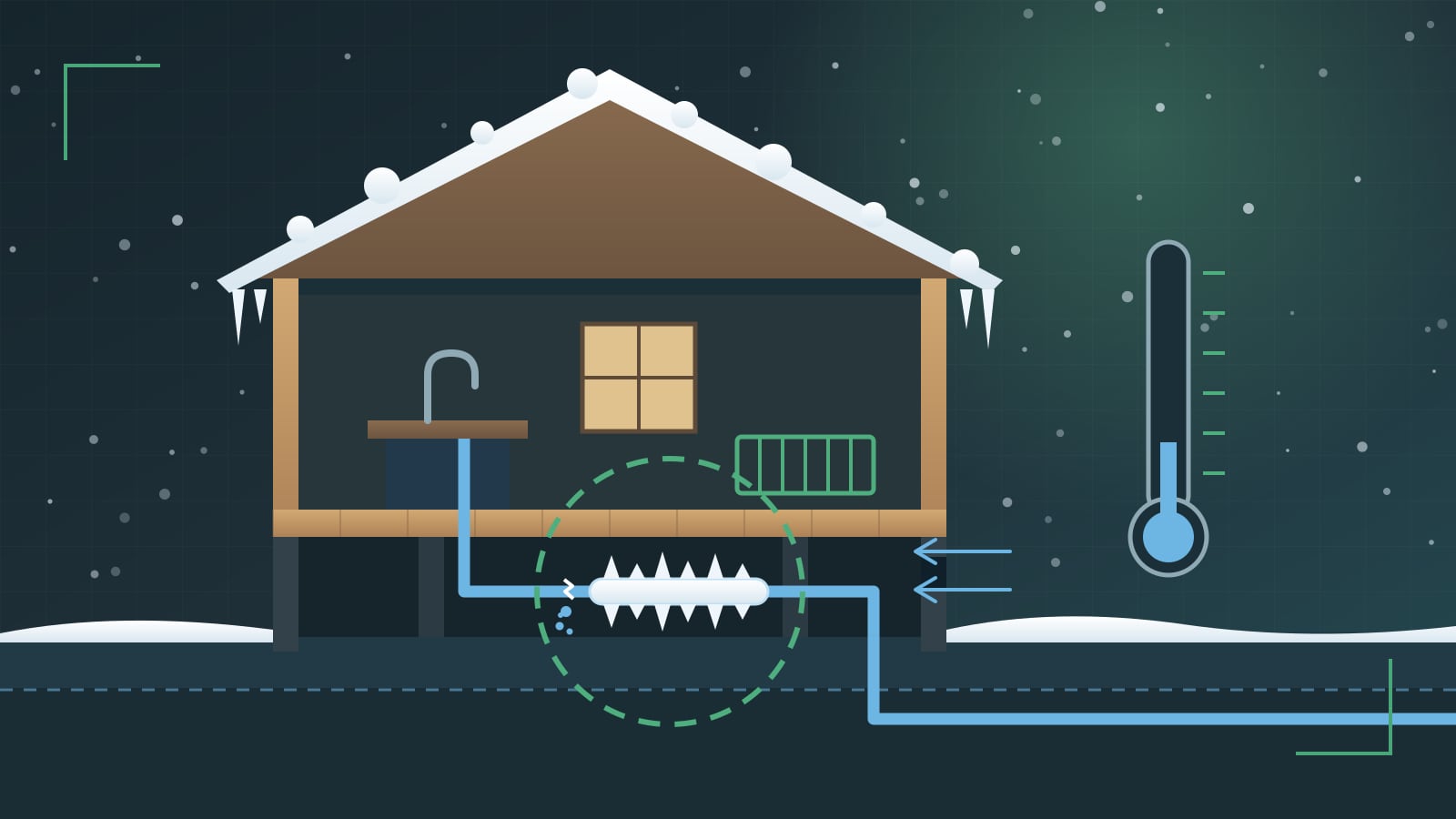
A water pipe that freezes rarely does any damage at that moment. It is when the ice lets go that the problems start. When an ice plug thaws large amounts of water can start leaking out, and if the house is empty it can go on for a long time before anyone notices.
Last winter was a reminder. The insurer Folksam received 7,960 leak claims between December and March, over 31 per cent more than the same period the year before. The insurer If saw around 70 per cent more water damage in holiday homes in January and February.
Short answer: keep the heat up in every space where water pipes run, protect the water meter and turn off the outdoor taps before the first cold snap. Insurers generally recommend a base temperature of around 15 degrees. A house that stands empty should either be kept heated and checked regularly, or have the water turned off and the system drained. If it has already frozen: close the valves, warm gently and never use an open flame.
Where water pipes freeze
The cold finds the same places year after year. These are the most common risk points:
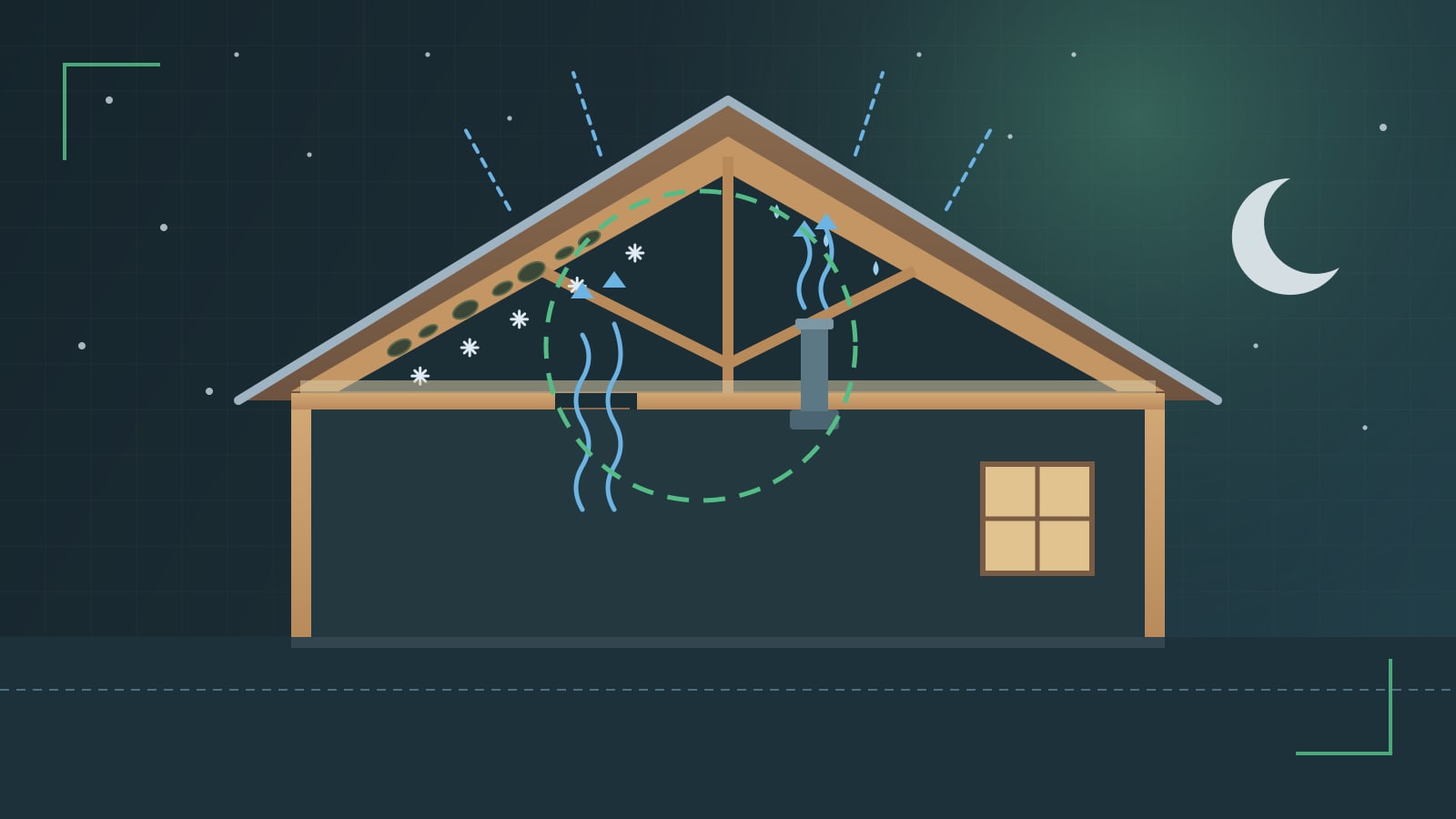
- Crawl spaces and cold spaces under the house. Pipes running uninsulated under the floor structure are exposed to draughts from the foundation vents.
- External walls and cold lofts. According to Säker Vatten, pipes run there are a common reason pipes freeze.
- Garages, storerooms and unheated basements. Rooms that are rarely used, and where nobody notices when it gets cold.
- The water meter, if it is in an unheated space.
- Outdoor taps and the pipes leading to them.
- The pipe in the ground. Snow insulates. After a winter with little snow, more frozen pipes were reported around the country.
Water expands when it freezes, and the pressure can split the pipe some distance from the ice plug itself. So the crack does not have to be where it is coldest, and it often only shows once the ice has let go.
Do this before the first cold snap
- Turn off the outdoor tap from the inside. Then open the tap outside so that it drains, and remove the hose.
- Insulate exposed pipes in the crawl space, garage and other cold spaces.
- Seal draughts around pipe penetrations and doors to cold spaces.
- Check the main stopcock. Everyone in the household should know where it is, and it should be possible to close it.
- Test the frost protection. Does the heating cable on the pipe work before it gets cold?
- Consider an automatic leak shut-off valve. It shuts off the water if there is a leak, even when nobody is at home.
- Don't turn the heating down too far. Ahead of the winter, If points out that the risk of periods of high electricity prices is elevated. Turning the heat down does not save much if it ends in frost damage.
The water meter is your cost if it freezes
As a property owner you are responsible for making sure the water meter is not damaged. The City of Gothenburg says that it must be protected against both heat and cold, that meters in unheated spaces risk freezing and breaking, and that you should check the meter if it is located like that.
Only the city's water department (Kretslopp och vatten) may replace a broken meter, and you pay for the replacement. According to the 2026 price list, replacing a frozen and broken meter costs SEK 4,615 including VAT for the smallest meter size, and that does not include any consequential damage.
The same basic rule applies in Härryda, where Härryda Vatten och Avfall states that the meter must be protected against freezing, heat and external damage. If you live in another municipality, the rules are in the municipality's general terms for water and wastewater (ABVA).
Houses that stand empty
Holiday homes and houses where nobody lives at the moment are the most exposed, because damage can go on for weeks. You have two options, and the most important thing is to do one of them properly rather than both by halves.
| The house is kept warm | The house is closed for the winter | |
|---|---|---|
| Heating | Around 15 degrees, and the heat must reach every space with pipes | May be lower or off, according to your insurance terms |
| Water | Close the main stopcock anyway | Close the main stopcock and the supply to the dishwasher and washing machine |
| Pipes | Water can stay in the system | Drain the pipes, water heater and toilet cistern, leave the taps open |
| Checks | Regular checks | According to your insurance terms |
The temperature differs slightly between insurers. Folksam recommends at least 10 degrees in the house and around 15 degrees in the kitchen and bathroom, while If recommends 15–16 degrees. If also advises you to close the main stopcock even when the heating is on, because a power cut during a cold snap can freeze the pipes.
When you open up the house again, warm it slowly and turn the water on with care. Folksam suggests a simple test: close all the taps and look at the water meter. If it is moving, you have a leak.
Your insurance has requirements
Frost damage is normally covered by house and holiday home insurance, but only if you have met the insurance's duty-of-care requirements. Three things affect what you get paid:
- Reduction. If you have not met the requirements, the payout for frost damage can, for example, be reduced by 25 per cent. In cases of gross negligence it can be reduced further or refused entirely.
- The excess. According to the consumer advice service Konsumenternas, it is often higher for frozen pipes.
- The age deduction. The closer pipes and surfaces are to the end of their lifespan, the more you pay yourself.
What such a requirement can look like is shown in Länsförsäkringar's holiday home terms from 2018: if the house is kept heated, the indoor temperature must be at least 15 degrees, and during longer absences any containers of water must be treated with antifreeze and the home must be checked regularly. If the house is not kept heated, the water system must be shut off and drained. The excess for freezing was 10 per cent of the claim amount, at least SEK 3,000 and at most SEK 10,000.
Terms differ between insurers and change over time. Read your own policy now, not after the damage has happened.
If it has already frozen
The first sign is usually that little or no water comes out of one or more taps when it is cold outside.
- Turn off the water. Close the main stopcock. If you suspect the meter or the pipe has frozen and split, close the shut-off valves at the meter.
- Find where the problem is. If one tap is affected, the fault is often local. If the whole house is affected, the ice is probably in the incoming pipe or at the meter.
- Warm gently. Raise the temperature in the space, for example with a fan heater. Because of the fire risk you must never use an open flame.
- Turn the water on slowly and stay by the main stopcock, so that you can close it immediately if it starts to leak.
- Check the meter with all the taps closed.
If the ice is in a wall, under the floor or in the ground, call a plumber. Säker Vatten particularly warns against homeowners thawing frozen pipes themselves without knowing what happens when the ice lets go. Once it has started leaking, the same steps apply as for other water damage: shut off, document and report. We go through them in water damage in a cooperative apartment.
Repair it properly, or it will freeze again
A pipe that froze once will do so again if it is repaired in the same place and in the same way. Säker Vatten has pointed out that poor repairs after frost damage can lead to new water damage, and that pipes should be run where they are visible or on the warm side of the insulation. That way they are easy to replace, and a leak does less damage.
Ask for an installation certificate. The insurance company may want to see it if there is damage later, and if the installation does not follow the rules, the payout may be lower or the excess higher.
Who pays?
| What froze | Who is responsible | Who to contact |
|---|---|---|
| A pipe in the house or on the plot | The property owner | A plumber, and the insurance company if there is damage |
| A pipe outside the plot | The municipal water utility | The municipality's water and wastewater customer service |
| The water meter | The property owner pays for the replacement | The municipality's water and wastewater customer service |
| A pipe in a housing cooperative | Depends on what burst and where | The board or the property manager |
The boundary is drawn differently in different municipalities. In Gothenburg, Kretslopp och vatten is responsible for the pipes up to half a metre outside the plot boundary. The rest belongs to the property owner. How responsibility is divided in a cooperative is covered in water damage in a cooperative apartment.
For property owners and cooperatives
In a larger property it is rarely the apartments that freeze. It is the garage, the bin room, the basement corridor and the heating substation – spaces where nobody spends time.
- Go through every cold space with pipes before the winter
- Check that doors close and that heating cables and thermostats work
- Add the check to the caretaker's rounds, and to the maintenance plan if pipes need rerouting
- At the same time, deal with the roof and responsibility for snow and ice
Frequently asked questions
At what temperature do water pipes freeze?
There is no fixed limit for the outdoor temperature. Water freezes at zero degrees, so what matters is the temperature around the pipe, how draughty it is and how long the cold lasts.
Does it help to leave a tap running slightly?
Moving water does not freeze as easily, so it can work temporarily during a cold snap if you are at home. It is not a solution for a house that stands empty.
Can I install a heating cable myself?
No, not a permanently installed 230-volt heating cable. According to the Swedish National Electrical Safety Board, that work must be done by a registered electrical installation company.
How do I know if a pipe has cracked?
Close all the taps and look at the water meter. If it is moving, there is a leak somewhere. Damp patches, hissing in the wall and falling pressure are other signs.
Does my insurance apply if I have turned the heating down to save electricity?
It depends on the terms. Insurers generally recommend around 15 degrees, and at lower temperatures other measures are required to stop the pipes freezing. The payout can be reduced if the requirements are not met.
Does the repair qualify for the ROT deduction?
Repairing and installing water pipes normally qualifies for the ROT tax deduction, and so does installing an automatic leak shut-off valve. Materials are not included, and nor is fault-finding as the only work. More about the rules in our guide to the ROT deduction in 2026.
Want to avoid the next frost damage?
Byggentra AB is based in Landvetter and carries out plumbing work in Härryda, Gothenburg, Mölndal, Kållered, Partille, Lindome and Kungsbacka. We reroute exposed pipes, help with preventive maintenance and sign ongoing service agreements for properties.
Describe the situation and we'll be in touch – free quote within 24 hours on weekdays. If it has already started leaking: close the main stopcock first.
The information above applies at the time of publication. Insurance terms and municipal rules differ, so always check what applies in your case. Most of the linked sources are in Swedish.