Basement drainage: warning signs, cost and the right timing
A damp basement does not always mean new drainage. How to work out what is wrong, what drainage costs in the Gothenburg area and when in the year it should be done.
A homeowner in Askim called in October last year. The basement wall was dark a metre up, the wallpaper had come away and the whole lower floor smelled like a root cellar. He had been quoted SEK 210,000 for new drainage and wanted a second price.
We did not dig. We looked at the downpipe in that corner, which ended in a splash block pointing straight at the foundation, and at the ground, which sloped towards the wall after the driveway had been resurfaced. The fix cost under SEK 20,000. The wall dried out over the winter.
It is not always like that. But it is like that often enough for a thorough investigation to be worth it before anyone starts up a digger.
Short answer: drainage normally lasts 30 to 50 years and needs redoing when the pipe is crushed, blocked or has lost its fall. Expect SEK 3,500 to 7,000 per running metre, and SEK 100,000 to 250,000 for a normal house in the Gothenburg area – often more in clay and with a basement. But find out where the water is coming from first. Roughly a third of the damp basements we look at have a cheaper fault than the drainage.
First: is it really the drainage?
Damp in a basement comes from four directions, and they require completely different measures.
Surface water from the roof and the ground. Broken or blocked gutters, downpipes without splash blocks, ground sloping towards the house, a newly built deck that has changed the run-off. This is the cheapest cause and the most commonly overlooked.
Ground moisture migrating in through the foundation wall. Here, drainage and a damp-proof barrier are the right measures. The symptoms are typically low on the wall and evenly spread along the external walls.
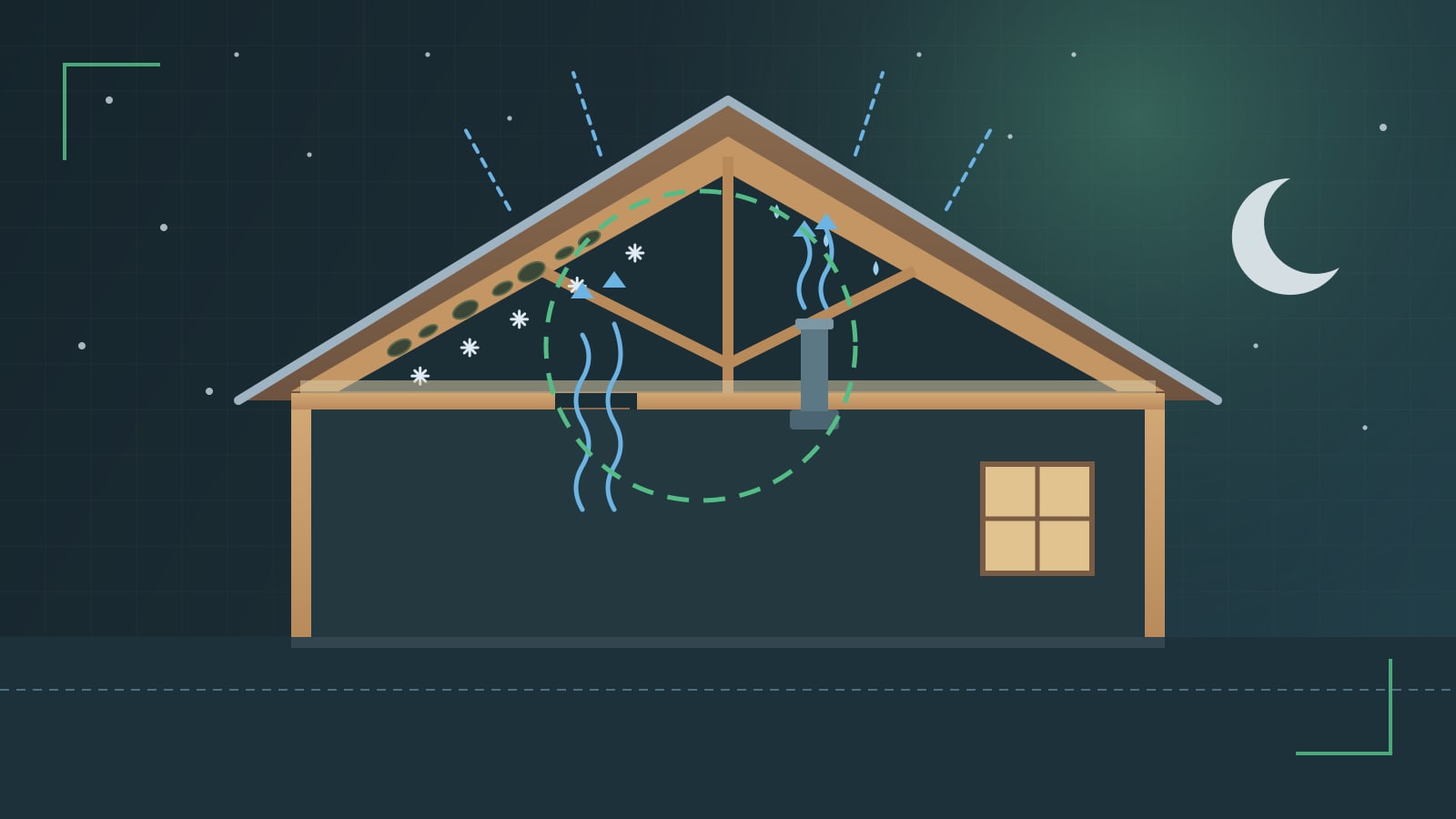
From the inside, as condensation. Warm, humid summer air meeting a cold basement wall produces moisture on the surface. The symptom looks identical, but the cause is ventilation and habits – and a dehumidifier solves what no drainage in the world can. A common mistake is to ventilate the basement extra hard on a warm summer day, which makes things worse, not better.
Leaking installations. A dripping water service pipe or a broken stormwater pipe under the slab.
The diagnosis is made with moisture measurements at different heights and depths, checks of gutters and ground slope, camera inspection of the stormwater pipes and a look at how the basement is used and ventilated. That investigation costs a fraction of a drainage job.
A quote for new drainage given without anyone measuring the moisture or filming the pipes is a guess – and you pay for it in six figures.
Signs the drainage really is worn out
- The age of the house. If the drainage is original and the house was built before the mid-eighties, it is probably past its technical lifespan.
- Salt deposits – white crystals on the inside of the foundation wall – that come back after being brushed off.
- Damp patches low on the wall, evenly along several external walls, worst after prolonged rain.
- Water standing in the inspection wells, or no inspection wells at all.
- Cracks in the foundation wall with moisture coming through.
- Flaking paint or render at the bottom of the plinth on the outside.
- A mouldy smell that lingers even after drying out and cleaning.
One sign is rarely enough. Three or more, and it is time to dig a trial pit at a corner to see the real condition of the pipe.
Why Gothenburg clay makes it harder
Greater Gothenburg sits on deep clay soils, and that affects both method and price.
Clay is dense. Water does not drain away by itself but stays against the foundation unless it is actively led away. That makes the fall of the drainage and the backfill material more important here than on a sandy plot, and it means that a sloppily done drainage job causes problems quickly.
Clay moves. Settlement is common in the area, and a drain pipe laid without enough fall can lose its fall entirely after a few years. We therefore lay the pipe with a good margin on the fall and put inspection wells at every corner, so that it can be flushed and filmed afterwards without digging.
On top of that, cloudbursts have become more frequent. A stormwater system sized in the seventies cannot cope with today's intense rain, and drainage that discharges into an overloaded stormwater pipe can run backwards. That is why we separate drainage and roof water where possible, and check against the municipality's connection requirements – the rules on how stormwater and drainage water may be connected differ between Gothenburg, Mölndal and Kungsbacka.
How a drainage job is done
- Investigation and trial pit. Moisture measurements, a check of surface water handling, camera inspection of existing pipes, a trial pit to assess the condition of the foundation wall.
- Excavation around the foundation. Down to the bottom of the footing, in stages so that the whole house is not exposed at once. Trees, shrubs and paving in the way are removed and restored or replaced.
- Cleaning and repairing the foundation wall. The wall is washed clean of old bitumen coating, cracks are repaired and the surface is levelled. This step is sometimes skipped by whoever is pushing the price down, and it is exactly what decides how long the damp-proof barrier lasts.
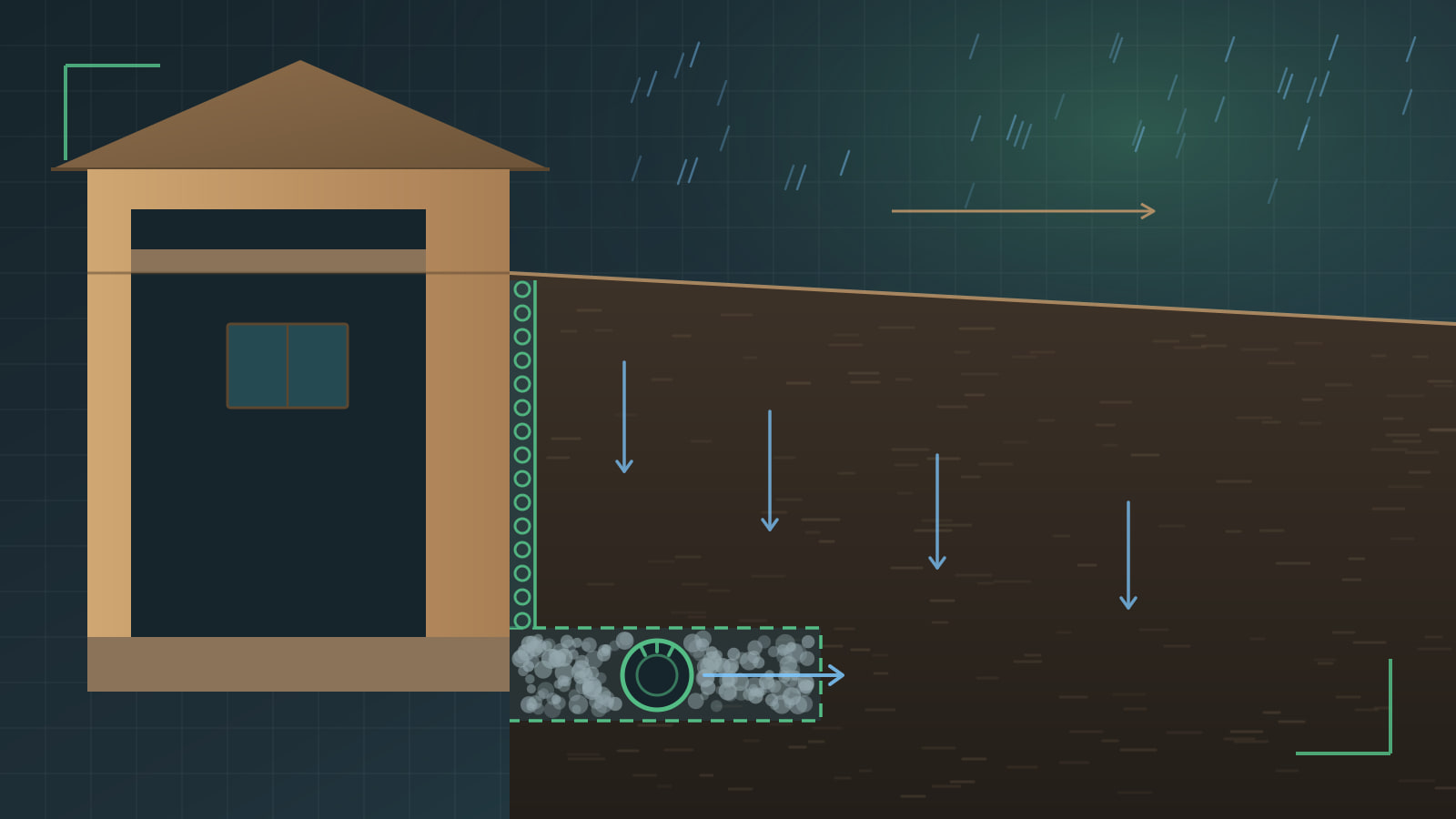
- New damp-proof barrier and drainage membrane. A dimpled membrane or equivalent that channels water downwards and creates an air gap against the wall, properly finished at the top by the plinth.
- New drain pipe in a bed of crushed stone wrapped in geotextile, laid with a controlled fall and with inspection wells at the corners.
- Backfilling with free-draining material, not with the clay that was dug out.
- Stormwater and ground slope. Downpipes are connected correctly, the ground is given a fall away from the house, and the surfaces are restored.
- Documentation. Photos from every stage before backfilling, plus camera inspection of the finished pipe.
Point eight is worth requiring in the contract. Once the trench has been filled in, the work cannot be inspected, and photos are the only thing that shows what you paid for.
What does drainage cost?
| Item | Normal range | Comment |
|---|---|---|
| Drainage, per running metre | SEK 3,500–7,000 | Labour and materials |
| Normal house without basement, approx. 40 m | SEK 100,000–200,000 | Split-level and basement houses cost more |
| House with basement in clay | SEK 200,000–350,000 | Deeper excavation, more material |
| Moisture investigation with camera inspection | SEK 8,000–20,000 | Done before, not after |
| Surface water measures only | SEK 10,000–35,000 | Gutters, splash blocks, ground slope |
The prices apply to the Gothenburg area and assume that a digger can get around the house. What pushes the cost up:
- A cramped plot where the machine cannot get in, or excavation that has to be done by hand
- A deep basement, which requires a deeper and wider trench
- Paving, decks, fences and trees that need to come out and go back
- Exposed bedrock
- A foundation wall that needs extensive repairs once exposed
- The need to relay the stormwater at the same time
The ROT tax deduction covers 30 per cent of the labour cost, up to the annual cap per person. Groundwork next to the home qualifies for ROT, but materials and machine hire are not included. Read more in our guide to the ROT deduction in 2026.
When in the year should it be done?
The best period is April to October. Digging in frozen ground is slower and more expensive, and backfilling is hard to do properly when the material is frozen.
Autumn, on the other hand, is the best time to discover the problem. Prolonged rain in September and October shows where the water goes in a way that a dry summer month never does. If you go down into the basement after three days of rain and feel along the bottom of the walls, you get a picture worth more than a site visit in July.
A practical order for most people: investigate in autumn, fix the surface water straight away, see whether that is enough over the winter, and book any drainage work for the spring.
Do the cheap things first
Before you order new drainage, do this – whatever the investigation later shows:
- Clear gutters and downpipes. Spring and autumn.
- Make sure the downpipes lead water away, at least two metres from the foundation, or into the stormwater system with a working leaf guard.
- Check the ground slope. The ground should fall away from the house, roughly 15 centimetres over the first three metres. New paving and tarmac are often the culprit.
- Keep vegetation away from the plinth.
- Ventilate the basement correctly – more in winter, less on warm humid summer days. A dehumidifier with a humidistat is cheap insurance.
- Look at the roof. A leaking roof and gutters cause moisture damage that looks like a drainage problem.
Sometimes that is enough. Sometimes it is not, but then at least you know the money is going to the right thing.
Frequently asked questions
How long does drainage last?
Normally 30 to 50 years. The lifespan depends more on how it was done and on the ground around the house than on the material of the pipe.
Does the whole house have to be redrained at once?
Not always. If the problem is limited to one side of the house, one side can be done, and that is considerably cheaper. But if the drainage is original and worn out all the way round, digging in stages ends up more expensive overall, because site set-up and restoration are paid for several times.
Can I do the drainage myself?
You can certainly do the surface water parts yourself. The drainage itself requires a digger next to a house foundation, knowledge of falls and backfilling, and checks on where pipes and cables run. A mistake here does not show until the ground has been filled in.
Does it help to just paint the basement wall on the inside?
No, and it usually makes things worse. A sealed interior paint or render traps the moisture in the wall instead of letting it dry out inwards. The moisture then moves higher up the wall.
What is the difference between drainage and a damp-proof barrier?
Drainage leads water away from the ground around the foundation. The damp-proof barrier, in practice a drainage membrane against the foundation wall, stops the remaining moisture from migrating in through the wall. A properly done redrainage includes both.
Shall we take a look at your basement?
Byggentra AB carries out moisture investigations, drainage and groundwork for homeowners in Kållered, Mölndal, Gothenburg, Lindome, Kungsbacka, Landvetter and Partille. We always start by finding out where the water is coming from, and we tell you when a simpler fix will do – it costs us a job and saves you a couple of hundred thousand.
Read more about our services or describe the problem and we'll be in touch – free quote within 24 hours on weekdays.